
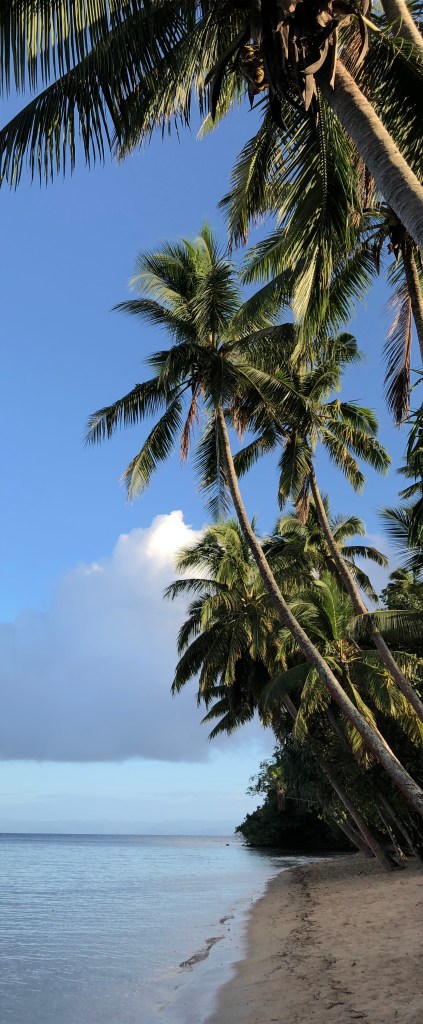
Well, I gave myself a nice gift – a trip to Fiji. Like countless other people, I’ve wanted to go to Fiji for a very long time. So, with the help of Bob Fenner’s arrangement of some activities and accommodations, I pulled the trigger and decided to make the trip happen. It did not disappoint.
Fiji is a nation that’s comprised of over 300 islands, which are home to almost 4,000 square miles of coral reef. You can find about 400 species of coral there, and well over 1,000 species of fishes, too. And, there are direct flights from Los Angeles to the relatively large city of Nadi, which are about 10 hours long. It’s a haul, for sure, as the distance from LAX to NDI is about 6,800 miles, but well worth the drag of dealing with long flights.
Los Angeles is home to the largest number of big importers of marine aquarium livestock in the U.S., too. So, the abundance of reefs and having a good connection between the two cities has helped Fiji become one of the largest exporters of livestock and live rock in the world. Having direct flights to Los Angeles also means livestock coming from there can have a relatively short time in-transit compared to things coming from places further west in the Pacific. That can translate to less stress and better health for these animals.
This also means that Fiji is a great place to go if you want to see a lot of the things we keep in aquariums doing what they do in their natural habitat. There’s plenty of stuff to see that we don’t keep in aquariums, too, like really big sharks. Lots of sharks, if you go to the right places.
Going this year also gave me an opportunity to see some reefs that have taken a beating from Mother Nature lately. Over the last few years, Fijian reefs have suffered from multiple waves of coral bleaching and hits from powerful tropical cyclones, leaving some areas in relatively poor condition. They’re rebounding though, and much faster than I’d have expected. After spending a lot of time in the water around there and doing some research at home, it’s clear that reefs can sometimes be more resilient than might be expected. That’s good news for the reefs, and for the marine aquarium hobby, too.
Anyway, I packed everything up when the time came, and headed for the airport. In addition to my clothes, dive gear, etc., I took two cameras, two underwater housings and a strobe, several lenses, chargers, batteries, and more – and a laptop and a charger for it, too. Quite a load of gear, but I didn’t want get there and then wish I hadn’t left something at home. Other than the photos seen here, you’ll most likely be seeing some more popping up here and there in future articles, as I got tons of good stuff, and a lot of video, as well.
So, I arrived at Nadi on the west coast of the main island, Viti Levu, and was then transported a few hours to Pacific Harbour, which is on the south-central coast of the island. Then, for the next few days, I just winged it. There are numerous things to do in the area, and right away I found that the people are exceptionally friendly and helpful when it came to figuring out what pick. The entire staff where I stayed was also great, and so was the food.
I did a good bit of walking around the area, mostly looking at plants, birds, and people. And, with some advice, I decided to go white-water rafting for a day on the Navua River. That was definitely a blast, as the river has lots of rapids, and it snakes its way through numerous steep-walled canyons, by waterfalls and cool rock formations, and next to some small villages. Once again, the staff was great and the trip was as educational as it was exciting.
For another day, I took a taxi-tour of Suva, which is the capital and largest city in Fiji, located at the southeast corner of Viti Levu. Arranged a day ahead of time, for just $75 a taxi picked me up and drove me into the city, carried me to the main tourist attractions, and then wherever else I felt like going for the whole day.
We visited Albert Park and Thurston Gardens, the Municipal Market, the Parliament Building, and the Grand Pacific Hotel, which opened in 1914, is sometimes called the “Grand Old Lady of the Pacific”, and was once visited by King Edward VIII and twice by Queen Elizabeth II amongst other notables. Other than those places, I also asked to go to the biggest grocery store in town to see the food and goods, to a rich neighborhood and a poor one, and to just drive around for a while, as well. Low tide had come by afternoon. So, for the next couple of hours I ended up walking around from tidepool to tidepool, looking at little critters, seashells, and such. That never gets old to me, but the time came to head back to Pacific Harbour.
Then, after a couple of lazy days, it was time to pack up and move over to Beqa Island for the diving portion of the trip, and while waiting for the boat to pick me up and carry me out to the island, I met up with a few friends that had just flown in from the States. Our ride picked us up, and off we went to Beqa Lagoon Resort for a week of spectacular boat and shore dives around this smaller island to the south of Pacific Harbour.

We were on the island by lunchtime, and I was already in the water by 3pm. Part of the package was unlimited shore dives, and I wanted to take full-advantage of that since there was a shallow-water reef that started less than 100 yards offshore. Within minutes of swimming out, I was already seeing things I’d never seen before, like a slow-moving school of juvenile longfin batfish, for example.
That was obviously just a tiny taste of what’s in Beqa Lagoon though, as there are supposedly over 100 dives sites there, which vary from patches, to pinnacles, to bommies, to fringing reefs, and even some wrecks. That’s no surprise, as the lagoon’s area covers over 100 square miles, and is also bordered all-around by many, many miles of barrier reef. Anyway, the boat diving started the next morning, and by the end of my stay I’d knocked out 18 dives in six days.
So, how was it? Well, objectively, I’ve been many places with better overall visibility. However, it varied considerably in different parts of the lagoon. Some areas were quite clear, while others were surprisingly turbid. Likewise, some areas had rich coral cover, being entirely blanketed by stony corals, while the coral cover was remarkably sparse in others. Well, sparse for being in a lagoon in Fiji. As I said, the structure was as highly variable from place to place too, but of course, that was the result of the dive crews deciding where to take us on different days and dives. They were great, by the way. Professional, knowledgeable, and friendly as it gets.
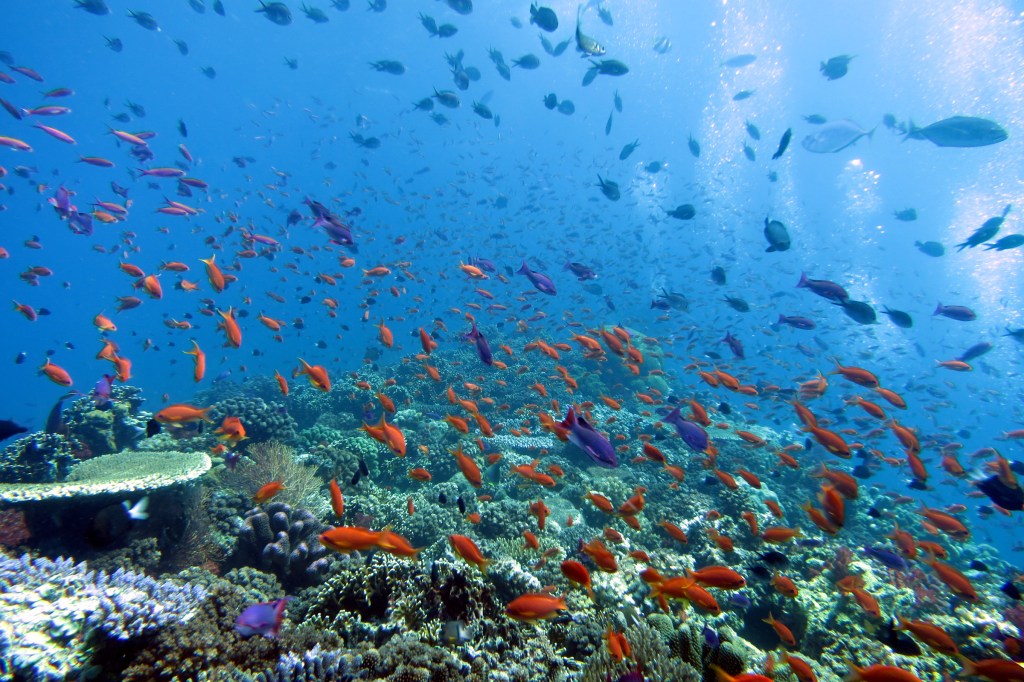
There were lots and lots of fishes, as to be expected, and I’d never seen so many anthias and triggers before. In fact, there were more anthias there than in the densest areas I’ve visited on the Great Barrier Reef. There were also lots of small corals that were no more than a couple of years old at best, and there were lots of larger corals too, all apparently in great health. However, signs of trouble could be found at times.

In some areas, the corals were just torn up, as in busted apart with branches and bits scattered all about after taking a beating from storms. I came across numerous big table acroporas too, which had been ripped from the substrate and dropped into deeper water, with some being flipped upside down in the process. All of them dead. But, like I said, there was no shortage of smaller corals growing larger and filling in the newly available real estate, and overall the reefs seemed to be recovering well. Despite hearing about widespread bleaching occurring in the recent past, I saw no signs of it at all. Again, this may have only been the case where we were taken, though.

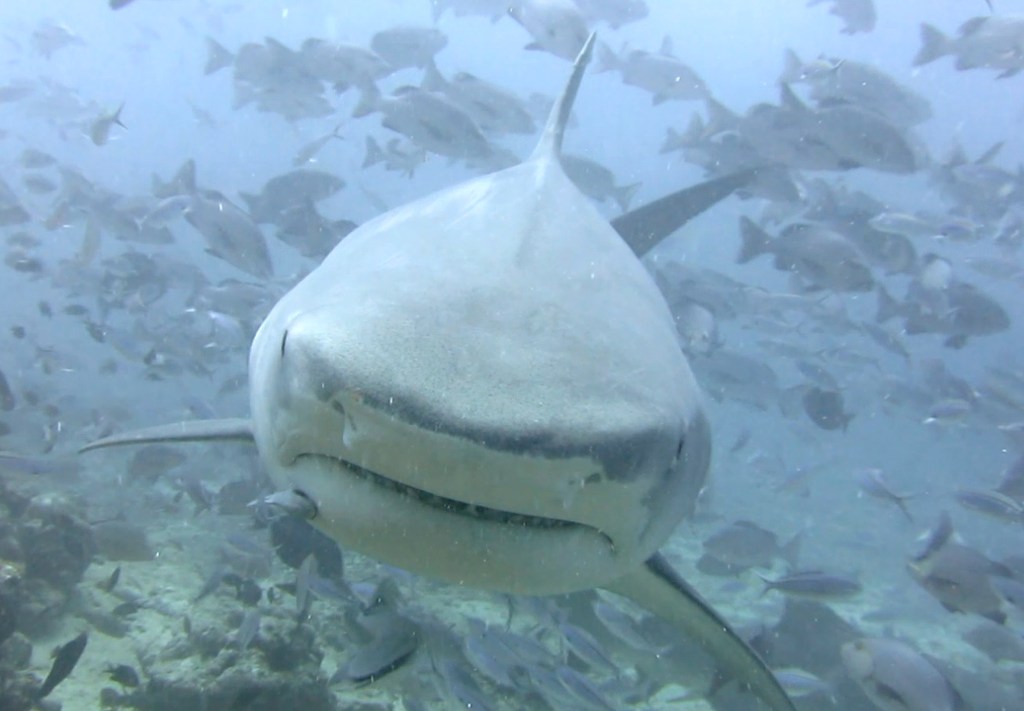
I was also able to go on four shark dives, which are well-known as being some of the best in the world. Even if the rest of the dives had been disappointing (they certainly were not), the shark dives would have made the trip worth it. We went down in an area called The Cathedral, where the sharks are regularly fed, and many showed up ready to put on a show. There were white-tips, black-tips, nurses, lemons, bulls, and tigers. All of them big, and all of them very close. It was a thrill for sure, and I confess to hollering in my regulator more than once!
Aside from all of that, the resort on the island was great, too. The service and food were fantastic, and there were several nighttime activities. Locals put on a fire show, singing and dancing, live music, and more. I really had never had a trip anything like this one at all. It was fantastic, and I highly recommend it.
If you’re a marine aquarist, but not a diver, I cannot express how wonderful an experience it can be to jump in and see the fishes and critters we love, at their full size and in numbers, going about their day to day business. There’s nothing else like it, and all the underwater pictures and video in the world cannot do it justice. Give it a try, if you haven’t already.
 jameswfatherree.com